Product Description
Prepolymers Polyurethane Raw Metarials
Prepolymers and MDI Prepolymers as Essential Raw Materials for Polyurethane Production
Polyurethane production relies heavily on high-performance raw materials, and prepolymers are among the most critical components in this process.
Formed through the controlled reaction of diisocyanates such as TDI or MDI with polyols, polyurethane prepolymers provide the backbone for elastomeric structures used in both thermoset and thermoplastic polyurethane applications.
Depending on the formulation, these systems may contain between 1% and 30% free isocyanate (NCO), a parameter that directly affects reactivity, processing behavior, and the mechanical strength of the final polyurethane product.
Because polyurethane prepolymers exhibit high chemical reactivity, they must be handled under carefully controlled temperature and humidity conditions.
Their sensitivity to environmental factors makes stabilization, moisture control, and precise process management essential for achieving consistent quality in polyurethane chemistry.
What Is a Polyurethane Prepolymer?
A polyurethane prepolymer is an early-phase polymeric structure produced by reacting diisocyanates with polyols under controlled conditions. This results in NCO-terminated resins with adjustable molecular weights, viscosities, and reactivity profiles.
These prepolymers are widely used across industrial polyurethane systems thanks to their durability, flexibility, adhesion strength, and compatibility with various polyurethane processing techniques, including casting, spraying, foaming, coating, and adhesive production.
Prepolymers are valued not only for their mechanical performance but also for their ability to modify processing windows, improve system stability, and tailor the final properties of polyurethane-based materials.
Their use helps manufacturers optimize curing behavior, pot life, elasticity, and long-term system performance.
Types of Polyurethane Prepolymers
Polyurethane prepolymers are generally classified into two primary categories based on the type of diisocyanate used:
1. TDI-Based Polyurethane Prepolymers
Commonly preferred for flexible polyurethane foams, elastomers, and thermoplastic applications. TDI prepolymers offer high elasticity, controlled reactivity, and compatibility with various foam systems.
2. MDI-Based Polyurethane Prepolymers
Used for rigid, strong, and thermoset polyurethane systems, MDI-based prepolymers offer excellent mechanical stability, improved adhesion, and strong resistance to stress and deformation.
In addition to the diisocyanate classification, polyurethane prepolymers can also be categorized as aromatic or aliphatic, depending on performance needs.
Aromatic prepolymers deliver high reactivity and strength, while aliphatic prepolymers offer superior UV resistance and color stability, making them ideal for coatings and outdoor applications.
Features and Advantages of MDI Prepolymers
MDI-based polyurethane prepolymers play an essential role in modern polyurethane technology due to their stability, reliability, and enhanced mechanical characteristics.
Produced from the controlled reaction of diphenylmethane diisocyanate with polyols, MDI prepolymers improve material durability and extend the lifecycle of polyurethane systems across numerous industries.
Key Advantages of MDI Prepolymers
High durability and mechanical strength:
MDI prepolymers withstand mechanical stress, abrasion, and deformation, making them ideal for applications that require long-term stability.Strong chemical resistance:
They maintain performance when exposed to oils, solvents, and harsh chemicals.Excellent adhesion performance:
These prepolymers greatly enhance bonding strength in polyurethane adhesives and coatings.Superior flexibility and elasticity:
Their optimized polymer structures contribute to improved elongation, impact resistance, and dimensional stability.
Due to these benefits, MDI prepolymer technology is widely used in industrial plastics, insulation materials, elastomers, polyurethane adhesives, coatings, and high-performance composite systems.
Industrial Applications of Polyurethane Prepolymers
Polyurethane prepolymers are essential raw materials used across a wide range of industries thanks to their adaptable chemical structures, controlled reactivity, and outstanding mechanical performance.
Their ability to be formulated with specific properties—such as enhanced flexibility, increased hardness, improved adhesion, or superior chemical resistance—allows manufacturers to design polyurethane systems tailored to the requirements of different industrial environments.
Whether the goal is to increase durability, improve processing efficiency, or achieve high-performance end products, polyurethane prepolymers play a foundational role in the development of advanced materials.
Polyurethane Insulation Systems
Prepolymers are integral components in polyurethane insulation systems, particularly where thermal and acoustic performance must be combined with long-term mechanical stability.
In both rigid and spray polyurethane foam applications, prepolymers help maintain closed-cell structure, ensuring improved insulation efficiency, reduced thermal conductivity, and enhanced dimensional stability over time.
Their strong adhesion characteristics allow insulation foams to bond effectively to substrates such as metal, concrete, and composite surfaces, making them suitable for construction, refrigeration, HVAC, and industrial equipment insulation.
Additionally, their resistance to moisture and temperature fluctuations contributes to the overall lifespan and reliability of insulation systems.
Polyurea and Polyurethane Coatings
Polyurethane prepolymers are widely used in high-performance coating systems where superior resistance to environmental stressors is required.
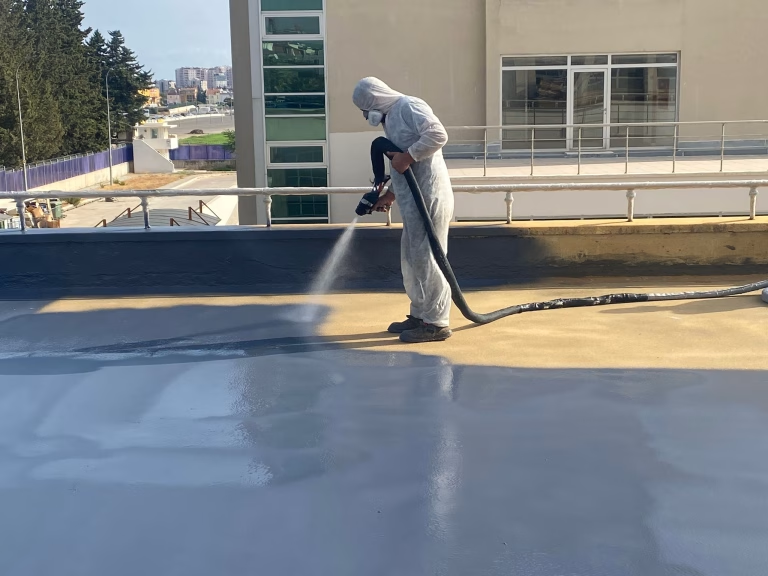
When used in polyurea and polyurethane coatings, prepolymers contribute to rapid curing, excellent adhesion, and enhanced film strength.
These coatings are preferred for applications exposed to chemicals, abrasion, UV radiation, and extreme weather conditions, such as industrial floors, pipelines, marine structures, transportation equipment, and protective barrier systems.
The versatility of prepolymer chemistry also allows coating formulators to fine-tune gloss levels, flexibility, hardness, and impact resistance depending on the end-use requirements.
Polyurethane Industrial Plastics
In industrial plastic applications, prepolymers significantly improve the mechanical properties of both rigid and flexible polyurethane components.
They enhance tensile strength, impact resistance, and dimensional stability, making polyurethane plastics suitable for demanding applications in the automotive, construction, mining, and machinery sectors.
Components such as housings, panels, structural reinforcements, conveyor parts, and energy-absorbing elements benefit from the consistent performance and processing efficiency enabled by prepolymer-based systems.
Their ability to be molded into complex shapes while retaining strength makes them an ideal choice for high-precision plastic components.
Polyurethane Foams
Prepolymers play a vital role in the production of polyurethane foams ranging from flexible comfort foams to high-density insulation materials. In flexible foam systems, they improve elasticity, resilience, and compression recovery—qualities essential for bedding, seat cushions, and ergonomic products.
In rigid and semi-rigid foam applications, prepolymers contribute to structural stability, improved insulation performance, and enhanced fire behavior.
Across industries such as automotive, furniture, packaging, and construction, polyurethane foams formulated with prepolymers ensure consistent cell structure, long-term durability, and efficient processing characteristics.
Polyurethane Adhesives and Sealants
In adhesive and sealant formulations, prepolymers act as key building blocks that determine bonding strength, flexibility, viscosity, and curing behavior.
Their ability to bond to metals, plastics, composites, wood, and concrete makes them highly versatile for industrial assembly, construction, transportation, and electronic applications.
Prepolymer-based polyurethane adhesives offer high peel and shear strength, excellent durability under dynamic loads, and reliable performance across a wide temperature range.
As sealants, they provide elastic movement capability, chemical resistance, and long-term sealing performance even under mechanical stress or environmental exposure.
Rubber Binders and Footwear Systems
Polyurethane prepolymers are commonly used in rubber binder systems due to their exceptional elasticity, abrasion resistance, and strong bonding capabilities.
They are preferred for sports surfaces, playground flooring, running tracks, and recycled rubber applications where high-impact durability and surface flexibility are required.
In footwear systems, prepolymers enhance comfort, shock absorption, and wear resistance, making them suitable for midsoles, outsoles, and specialized performance footwear.
Their controlled reactivity ensures efficient production while delivering consistent material properties throughout the lifecycle of the product.
Flexible and CASE Polyurethane Systems
In coatings, adhesives, sealants, and elastomers—collectively known as CASE systems—prepolymers play an essential role in defining mechanical performance and processing behavior.
They improve tensile strength, elongation, hardness, chemical resistance, and long-term durability while maintaining ease of application and predictable curing characteristics. Prepolymers allow formulators to develop high-performance CASE materials used in industrial maintenance, transportation, infrastructure, electronics, and protective systems.
Their adaptability supports a wide range of formulations from flexible elastomers to tough, chemical-resistant coatings.
Prepolymers as Core Raw Materials for Polyurethane Systems
Prepolymers are foundational components in modern polyurethane production due to their versatility, stability, and ability to enhance performance across rigid, flexible, thermoset, and thermoplastic polyurethane applications.
Their chemical structure enables them to deliver superior durability, enhanced flexibility, strong adhesion capability, and improved resistance to environmental and mechanical stress. For manufacturers seeking consistency and performance, polyurethane prepolymers remain indispensable.
You can contact us to learn more about customized formulations and polyurethane raw material solutions tailored to your production needs. You can also visit our LinkedIn page to learn more about our products and our company.
Why Choose Pluskim Prepolymers?
High Quality Polyurethane Raw Materials
Pluskim prepolymer systems are manufactured under strict quality control processes, ensuring consistency, stability, and reliability across all polyurethane applications.
Wide Product Range for Polyurethane Systems
Offering a diverse selection of tailor-made polyurethane prepolymers, Pluskim supports industries ranging from insulation and coatings to elastomers, footwear, adhesives, and industrial plastics.
Expertise in Polyurethane Chemistry
With deep experience in polyurethane raw materials, Pluskim provides technical guidance, system optimization, and custom formulations developed to meet specific performance targets.
Request Form