

Introduction
Energy efficiency and long-term structural performance have become key priorities in today’s construction industry. Polyurethane thermal insulation stands out as one of the most effective methods to increase indoor comfort while significantly reducing energy consumption. Both closed cell and open cell polyurethane systems deliver exceptional results depending on the specific needs of the project.
This article explains:
-
The core benefits of polyurethane thermal insulation
-
The technical distinctions between closed cell and open cell polyurethane systems
-
Pluskim’s advanced insulation solutions designed for modern buildings
Advantages of Polyurethane Thermal Insulation
Polyurethane-based insulation provides several notable advantages:
-
Superior Thermal Resistance: Its extremely low thermal conductivity minimizes heat transfer and supports stable indoor temperatures.
-
Excellent Air Sealing: Prevents unwanted air leakage, enhancing HVAC efficiency.
-
Lightweight yet Robust: Ensures durable insulation without increasing the structural load.
-
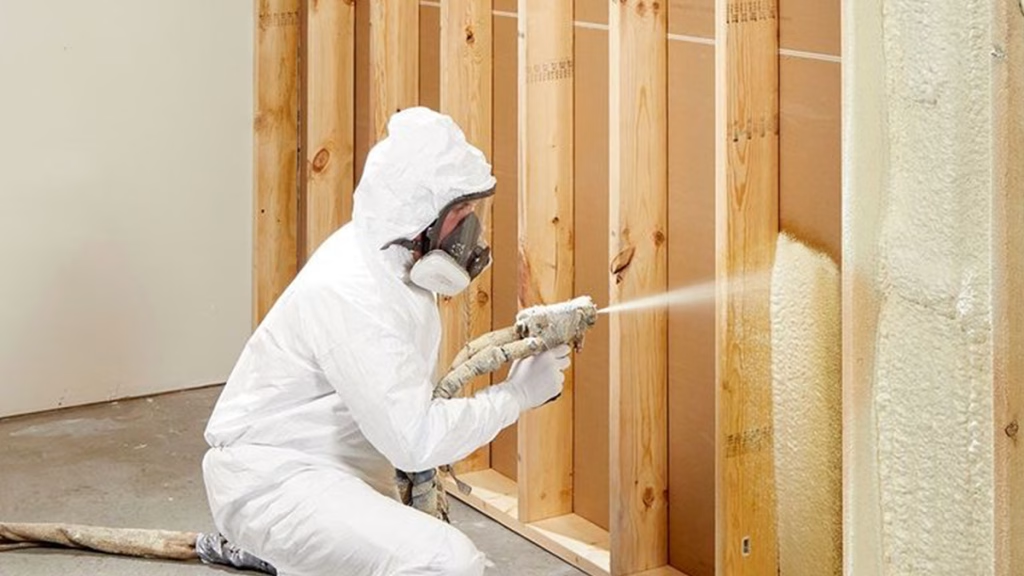
Quick and Practical Application: Spray-on application allows rapid installation and uniform coverage.
-
Moisture Barrier: Especially in closed cell systems, the dense cell structure provides strong resistance against moisture and water absorption.
Closed Cell Polyurethane
Closed cell polyurethane foam is characterized by its rigid and compact cellular structure:
-
Thermal Conductivity: Extremely low, enabling high-level insulation performance.
-
Waterproof Properties: The closed cell formation blocks water infiltration.
-
Structural Support: Adds mechanical strength to the applied surfaces.
-
Density: Commonly ranges between 30–50 kg/m³.
-
Typical Application Areas: Roofs, exterior façades, industrial zones, basements, and cold storage facilities.
Open Cell Polyurethane
Open cell polyurethane foam provides different functional benefits thanks to its soft and flexible nature:
-
Lightweight & Adaptive: Offers excellent acoustic performance while placing no additional burden on the structure.
-
Vapor Permeability: Allows vapor diffusion, helping prevent moisture accumulation and condensation.
-
Density: Generally between 7–12 kg/m³.
-
Application Areas: Interior partition walls, attic spaces, sound-insulated zones, and residential applications.
Pluskim’s Innovative Polyurethane Thermal Insulation Solutions
Pluskim delivers high-quality insulation systems designed to meet a wide range of performance requirements across different construction applications.
-
High-Performance Insulation: Exceptional thermal efficiency that contributes to significantly lower energy expenses.
-
Fast and Efficient Application: Spray technology ensures rapid, seamless installation and reduces labor time.
-
Durability & Long Service Life: Outstanding resistance to environmental conditions, chemicals, and mechanical impacts.
Conclusion
Polyurethane thermal insulation plays an essential role in improving energy efficiency, reducing operational costs, and enhancing overall building comfort. Pluskim’s closed and open cell polyurethane solutions offer reliable, long-lasting performance tailored to the needs of modern construction projects.
For more information or to incorporate Pluskim’s advanced insulation systems into your next project, feel free to contact us.