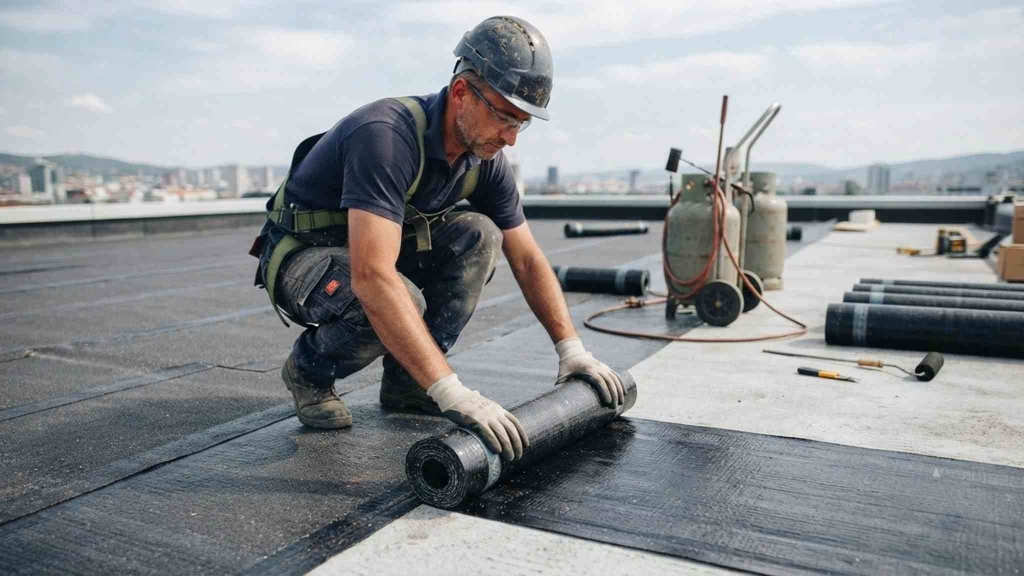
From building foundations to roofs, from terraces to wet areas, the choice of waterproofing membrane directly affects a project’s long-term performance. Polyurethane (PU) based liquid membranes and traditional bitumen membranes, the two most widely used systems on the market, offer different advantages and suit different projects to different degrees. In this article, we compare the two systems technically, look at which solution makes more sense for which project, and weigh the cost-performance balance.
Key Differences Between the Two Systems: Application Method, Flexibility, Lifespan
The most obvious difference between polyurethane and bitumen membranes stems from their application methods. Bitumen membranes are typically manufactured as rolls and bonded to the substrate by torch-melting or hot asphalt. This creates overlap seams; every seam is a potential weak point. Polyurethane liquid membranes, on the other hand, are applied in liquid form by roller or trowel and cure into a single-piece, seamless layer. The practical result of this difference is that on surfaces with complex geometry, and details with many corners and transitions, polyurethane membranes provide more reliable waterproofing thanks to their seamless structure.
The two systems also differ in flexibility. Bitumen membranes tend to stiffen at low temperatures, which can lead to micro-cracks over time. Polyurethane-based systems retain their flexibility across a wide temperature range and adapt to the building’s movements, such as thermal expansion and ground settlement. In terms of lifespan, both systems, when properly applied, can last many years; however, the UV resistance and chemical resistance of polyurethane membranes generally provide a longer service life in exposed applications such as terraces and roofs.
Advantages of Polyurethane Membranes: Cold Application, Detail Transitions
One of the biggest advantages of polyurethane waterproofing systems is that they allow cold application. Unlike bitumen membranes, they don’t require an open flame or heating equipment, which increases application safety and makes it possible to work in environments with fire risk, such as renovations in occupied buildings.
Polyurethane membranes also stand out when it comes to detail transitions. On pipe penetrations, drain openings, corner junctions and irregularly shaped surfaces, the liquid-applied membrane fully penetrates every point of the surface and forms a seamless whole. For example, hybrid products like bitumen modified PU liquid membrane combine the flexibility and ease of application of polyurethane with the cost advantage of bitumen, drawing on the strengths of both worlds. Such systems are particularly preferred for foundation retaining walls, terraces and wet floors.
Another important advantage of polyurethane membranes is their fast curing time. Two-component (2K) systems become usable within a few hours, while full mechanical strength is generally reached within 24-48 hours. This offers a significant time advantage on job sites with tight project schedules.
Advantages of Bitumen Membranes: Cost, Widespread Use
The strongest point of bitumen membranes is the cost advantage that comes from decades of application history and a wide user base. Raw material cost is generally lower compared to polyurethane systems, and skilled applicators are widely available in Türkiye. This makes bitumen membranes economically attractive, especially on large-scale, flat-geometry surfaces such as wide roof areas and standard foundation applications.
Bitumen membranes are also a well-tested, standardized technology used for years, and are frequently referenced in building inspection and specification processes. SBS or APP modified bitumen sheets provide predictability in engineering calculations thanks to their well-known technical properties.
That said, the seamed structure of bitumen membranes and the torch-based application method that requires a heat source increase both the risk of workmanship errors and the importance of fire safety precautions. For this reason, the experience of the application crew is a critical factor when choosing bitumen membranes.
Which System Should Be Preferred for Which Project?
System selection largely depends on the building’s intended use and geometry:
- Foundation retaining walls and basements: In areas continuously exposed to groundwater, polyurethane liquid membranes or bitumen modified PU systems are preferred thanks to their seamless structure.
- Terraces and balconies: In these areas, which contain many detail transitions such as drains, railing posts and door thresholds, the flexibility and seamlessness of polyurethane membranes provide an advantage.
- Large flat roof surfaces: On wide, flat areas with low detail density, traditional bitumen membranes can still be a sensible choice in terms of cost-effectiveness.
- Wet areas (bathrooms, kitchens): Since these contain small areas with many transition points, polyurethane-based liquid systems as a waterproofing membrane offer a practical and reliable solution.
- Pools and water tanks: In these structures, which are continuously exposed to water pressure, polyurethane/polyurea based systems stand out due to their flexibility and chemical resistance. Polyurea polyurethane coating systems can also be considered here.
When budget, application time and surface geometry are evaluated together, a hybrid use of both systems (for example, bitumen on large areas and polyurethane on details) often gives the most balanced result.
Cost Comparison and Long-Term Performance
When comparing short-term cost, bitumen membranes generally appear more economical. However, the picture can change when long-term performance is evaluated. The seamless structure of polyurethane membranes reduces maintenance and repair costs, because the most common problem with bitumen membranes is leaks that develop at seams over time. Detecting and repairing these leaks, especially in hidden areas like under foundations or in roof spaces, is both costly and time-consuming.
In addition, the UV and chemical resistance of polyurethane systems delays the need for recoating in applications exposed to the elements. When calculated over a 15-20 year life cycle, this can lower the total cost of ownership (TCO), even if the initial cost is higher.
Ultimately, the right decision should be made not just by comparing unit prices, but by considering the building’s intended use, detail density, application conditions and expected service life together. To determine the right system for your project’s specific requirements, you can contact our technical team or explore Pluskim’s waterproofing membrane and polyurethane construction systems portfolio.
Frequently Asked Questions
Is polyurethane waterproofing more expensive than bitumen membrane? The initial cost is generally somewhat higher, but its seamless structure can balance the total cost over the long term by reducing maintenance and repair expenses.
Can the two systems be used together? Yes. Using bitumen membrane on large flat surfaces and polyurethane liquid membrane at corners and detail transitions optimizes the cost-performance balance in many projects.
Which system is more suitable for wet areas? In small areas with many transition points, such as bathrooms and kitchens, a polyurethane-based waterproofing membrane is a more practical solution due to its seamless structure.
What is the biggest disadvantage of bitumen membrane? The leaks that can develop at seams over time, and the workmanship and safety risks brought by the torch-based application method requiring a heat source.